Cardboard Food Containers: A Practical Sourcing Guide for Food Service Businesses
Selecting the right cardboard food containers is one of those operational decisions that quietly shapes customer satisfaction, brand perception, and delivery efficiency. Whether you run a single restaurant, manage a chain of takeaway outlets, or operate as a distributor supplying food packaging to multiple clients, the containers you choose matter more than most people realise. This guide walks through the key factors food service businesses should consider when sourcing cardboard food containers at scale — from material performance and food compatibility to customisation options and logistics.
Why Cardboard Remains a Go-To Material
Cardboard — particularly kraft paper and paperboard — has been a staple in food packaging for decades. It is lightweight, cost-effective, and widely accepted across recycling streams. Compared with plastic or aluminium alternatives, cardboard containers offer strong branding surfaces, easy printability, and a natural look that aligns well with sustainability messaging. For restaurants and takeaway brands, cardboard containers signal freshness and environmental responsibility — qualities that increasingly influence purchasing decisions.
Understanding the Main Types of Cardboard Food Containers
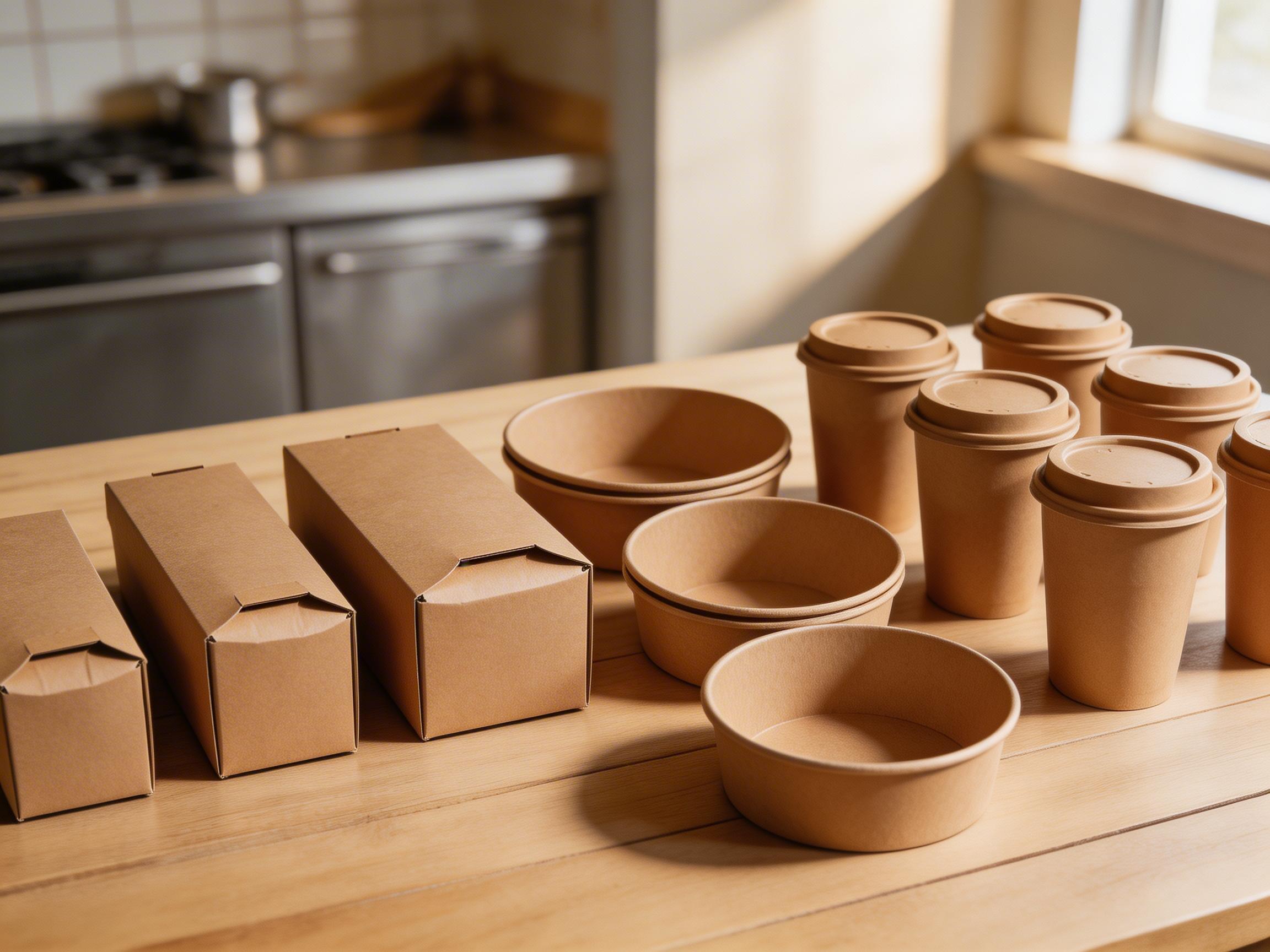
Not all cardboard containers are created equal. The most common categories include:
- Takeaway boxes: Rectangular or square fold-up boxes, ideal for rice dishes, pasta, curries, and mixed meals. Often made from kraft paperboard with a grease-resistant coating.
- Soup cups: Round containers with tight-fitting lids designed for hot liquids. Usually lined with PE or PLA to prevent leakage.
- Salad bowls: Wide, shallow containers suited for cold items, grain bowls, and poke. Available in kraft or white paperboard finishes.
- Kraft paper bowls: Deep round bowls suitable for noodle dishes, stews, and porridge. A popular choice across Asian food service.
- Food trays and chip scoops: Open-top designs for finger foods, chips, and snacks. Common at food courts, events, and street-food stalls. Choosing the right container type starts with understanding your menu and how food will be stored, transported, and consumed.
Key Factors to Consider When Sourcing Cardboard Containers
1. Food Compatibility and Lining Material
The type of food directly determines the lining your containers need. Dry foods such as sandwiches and pastries can use unlined cardboard. Wet, saucy, or oily dishes require a moisture barrier — typically polyethylene (PE) or polylactic acid (PLA). PLA linings, derived from plant starch, are often marketed as compostable and appeal to brands targeting eco-conscious consumers. PE linings are more widely available and tend to perform better under high-heat conditions. Discuss your menu requirements with your supplier to ensure the lining matches both food safety needs and your sustainability positioning.
2. Size, Capacity, and Portion Control
Ordering containers in the wrong size leads to wasted material, unhappy customers, or both. Map your menu items to container volumes before placing an order. Common capacities include:
- Small (250–500 ml): Snacks, sides, desserts, small portions
- Medium (500–750 ml): Standard takeaway meals, salads, rice bowls
- Large (750–1500 ml): Sharing portions, family meals, large noodle bowls If you offer combo meals, consider containers with internal dividers to keep food components separate. Stackable designs also help when packing multi-item delivery orders.
3. Structural Strength and Leak Resistance
A container that collapses mid-delivery is a liability. For heavier meals or those with sauces, opt for heavier-weight board — typically 280–350 gsm for takeaway boxes. Look for containers with secure locking mechanisms or tight-seal lids. For liquid-heavy dishes, round soup cups with rolled rims and matching polymer lids provide better leak protection than square boxes. Testing samples with your actual menu items is the most reliable way to confirm performance.
4. Temperature Tolerance
Consider whether your containers will hold hot food, cold items, or both. Most kraft containers handle temperatures up to approximately 90°C, which covers typical takeaway service. If you need microwave-safe containers, check the supplier's specifications for heat resistance. For cold items like ice cream or chilled desserts, containers with a moisture-resistant outer surface help maintain structural integrity when condensation forms.
Customisation and Branding Opportunities
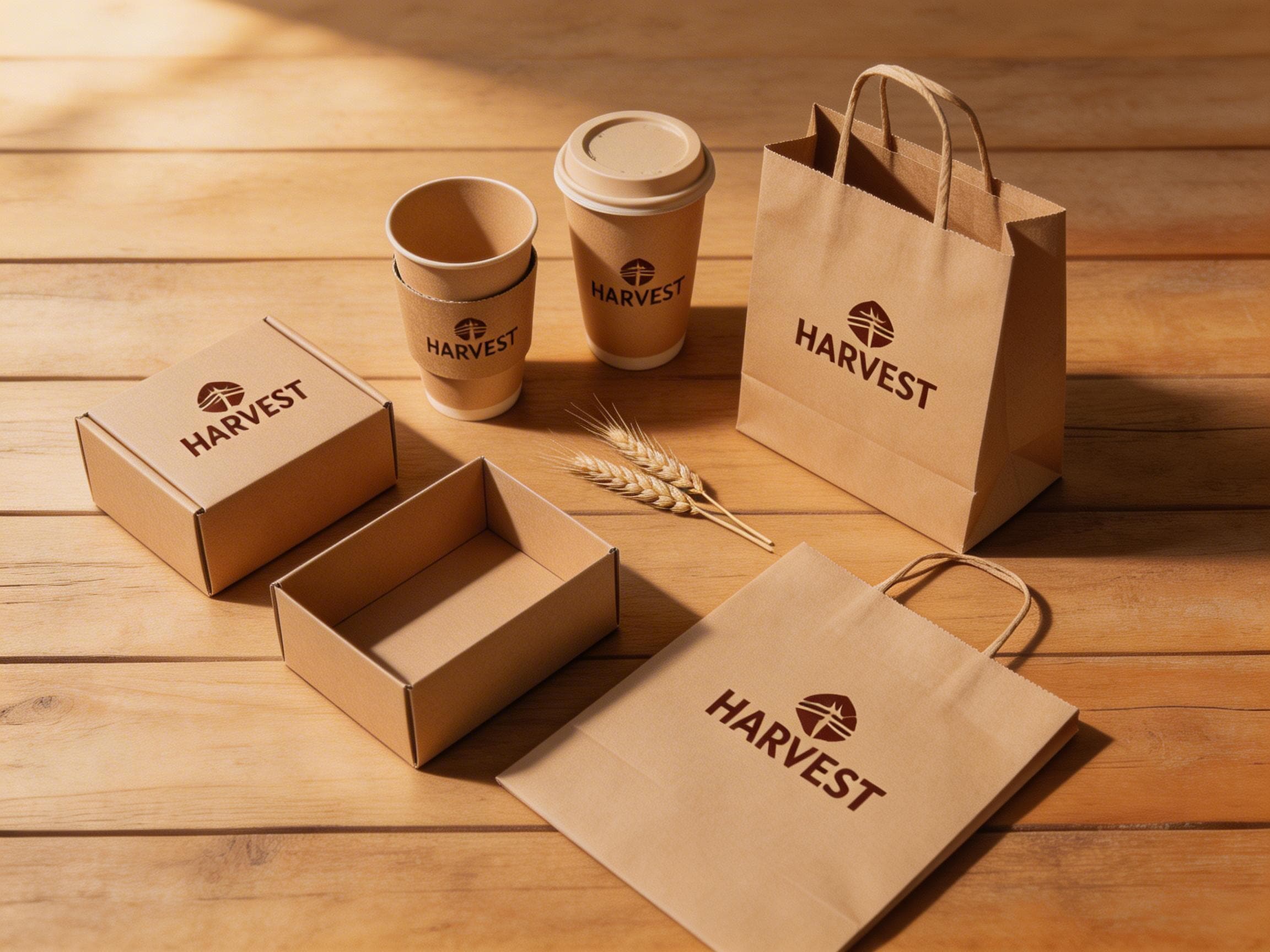
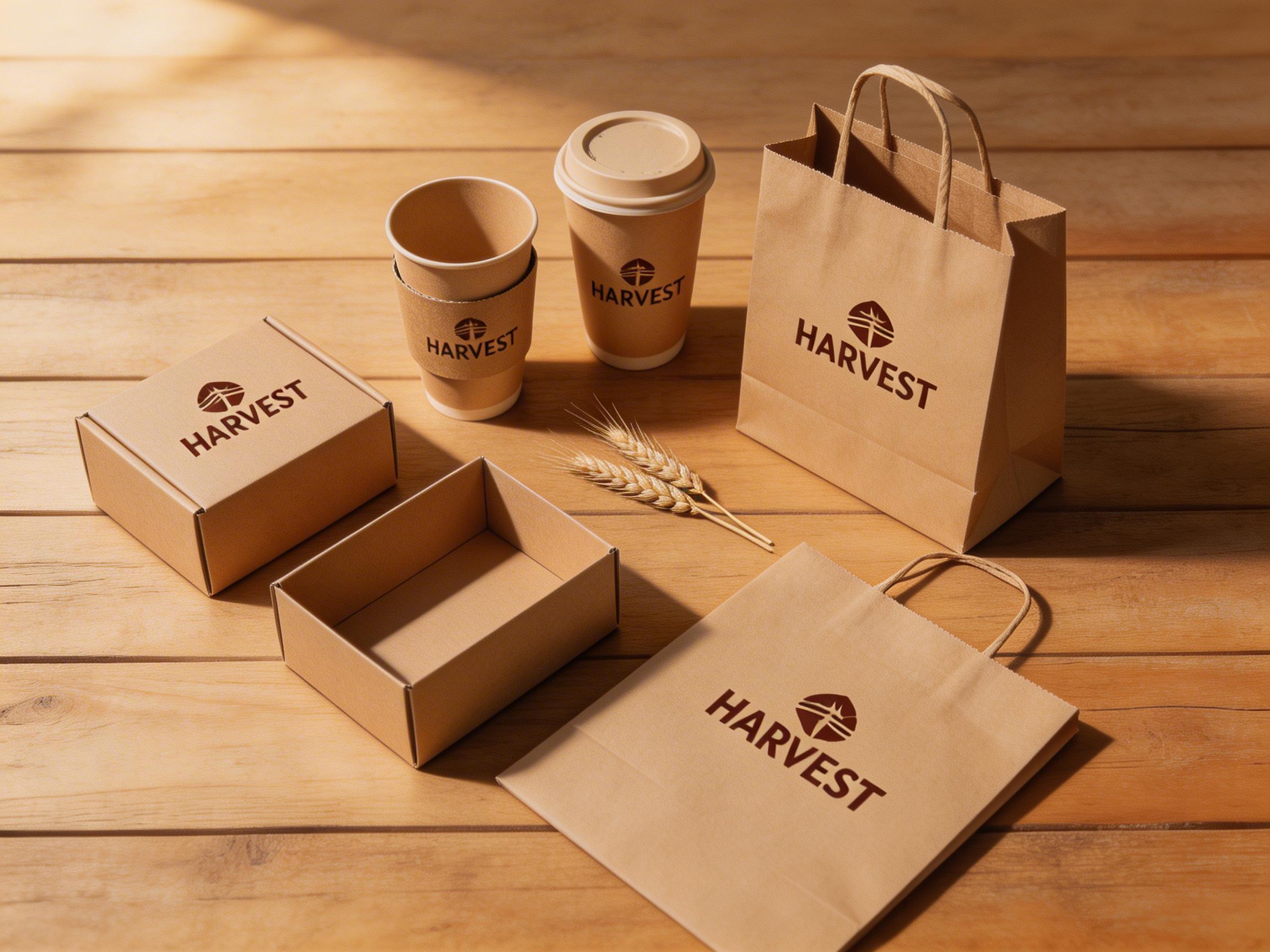
Cardboard containers offer one of the best surfaces for brand expression in the food packaging world. Key customisation options include:
- Logo and colour printing: Flexo printing for cost-effective bulk runs, or offset printing for higher-definition artwork on premium lines.
- Custom sizes: Adjusting container dimensions to fit specific portions or plating styles.
- Matte or gloss finishes: Different lamination options to match your brand aesthetic.
- Window cut-outs: Transparent patches that let customers see the food inside — popular for bakery and salad containers. At TakeawayPack, we support flexible minimum order quantities for custom-printed containers, making it practical for mid-size restaurant groups and emerging brands to access branded packaging without excessive inventory risk. Mixed-product sourcing — combining containers, cups, and bags in a single order — also helps streamline procurement and reduce shipping costs.
Ordering Considerations for Importers and Distributors
If you are sourcing containers for resale or multi-site distribution, a few operational factors deserve attention:
- Lead times: Stock items typically ship within 7–15 days. Custom-printed orders require 15–30 days after artwork confirmation.
- Mixed loading: Consolidating different SKUs (containers, cups, lids, bags) into one shipment reduces per-unit freight costs.
- Quality control: Request pre-production samples and random inspection reports before shipment. Verify board weight, coating integrity, and print accuracy.
- Trade terms: Discuss EXW, FOB, CIF, or DDP options depending on your logistics capability and destination market.
- Sample policy: Reputable suppliers should offer stock samples for evaluation. Custom mockups may be available depending on the project scope.
Sustainability Claims: What to Communicate Honestly
Many food service brands want to highlight the environmental attributes of cardboard packaging. Common claims include recyclable, compostable, and biodegradable — but these terms are not interchangeable.
- Recyclable means the container can enter standard paper recycling streams (assuming it is not heavily contaminated with food waste).
- Compostable typically applies to PLA-lined containers that break down under industrial composting conditions.
- Biodegradable is a broader and less regulated claim. Be specific in your customer-facing messaging and avoid vague environmental assertions. Accuracy builds trust; exaggeration risks backlash.
Practical Tips for Getting Started
- Order samples first. Test containers with your actual menu items for fit, leak resistance, and visual appeal.
- Standardise where possible. Limiting your container SKUs simplifies ordering, storage, and staff training.
- Think about the full meal experience. Coordinate containers with matching cups, bags, and napkins for a cohesive brand presentation.
- Plan for peak periods. Build buffer stock ahead of holidays and events when demand spikes.
- Negotiate volume tiers. Larger orders unlock better per-unit pricing, so consolidate demand where possible.
Conclusion
Cardboard food containers remain one of the most versatile, brandable, and operationally practical options for food service businesses worldwide. By matching container type and specifications to your menu, sourcing from reliable suppliers, and taking advantage of customisation options, you can elevate both the customer experience and your brand presence. If you are evaluating cardboard containers for your restaurant chain, distribution business, or takeaway brand, TakeawayPack offers a broad range of options with flexible MOQ, mixed loading, and quality inspection support. Contact us at info@takeawaypack.com to discuss your requirements or request samples.