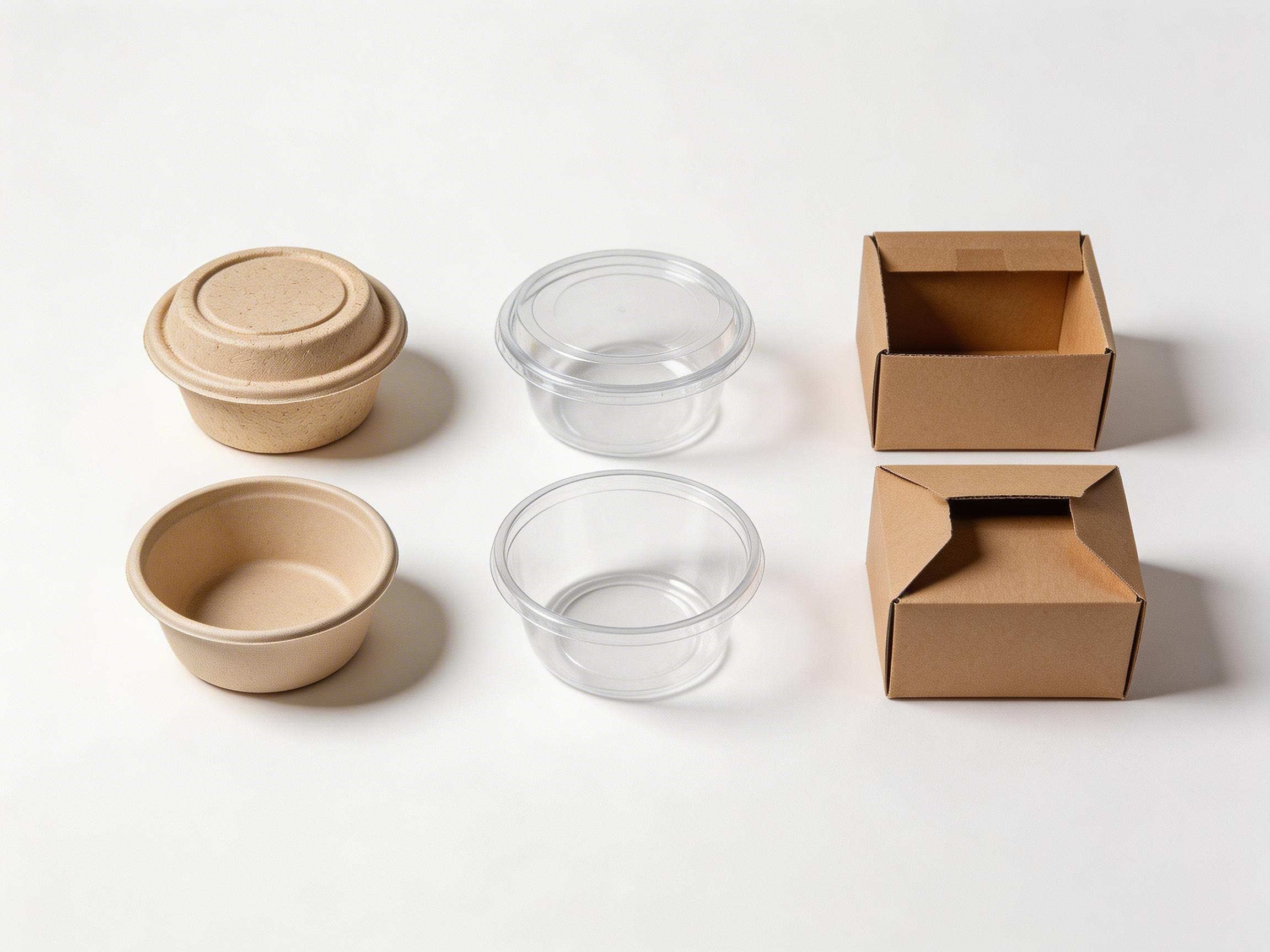
Biodegradable, Recyclable, or Compostable? A Sourcing Guide to Eco-Friendly Food Packaging
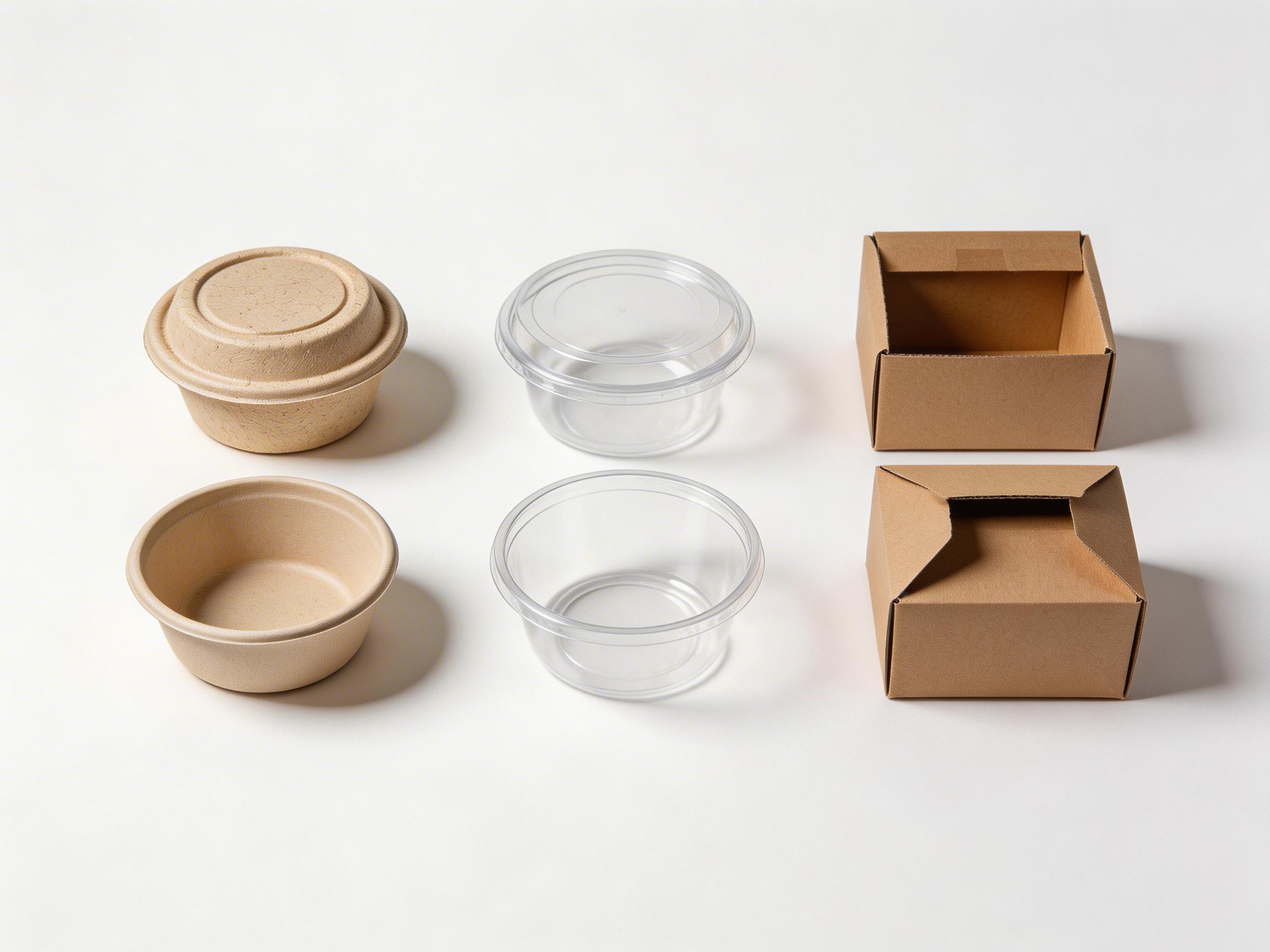
Food-service buyers hear these three labels constantly: biodegradable, recyclable, and compostable. They sound like interchangeable synonyms for "green," yet each term describes a fundamentally different end-of-life pathway — and choosing the wrong one can mean wasted money, failed compliance, or packaging that ends up in a landfill anyway. This guide breaks down what each category actually means, how the materials perform in real-world conditions, and which option makes the most commercial sense for importers, distributors, and food-service brands sourcing disposable packaging at scale.
The Core Difference in One Sentence
- Biodegradable packaging breaks down naturally over time through microbial action — but the timeline and conditions are largely undefined.
- Compostable packaging breaks down within a specific, certified timeframe and leaves no toxic residue behind.
- Recyclable packaging can be collected, processed, and turned into new material — but only if local infrastructure accepts it. These are not competing claims for the same thing. They describe three entirely different waste-management strategies, and the best choice depends on your market's disposal infrastructure just as much as the material itself.
Biodegradable Food Packaging
What It Means
A biodegradable material will eventually decompose into carbon dioxide, water, and biomass through the action of bacteria and fungi. The keyword is "eventually" — there is no universal time requirement. In some environments decomposition happens in months; in others it can take years.
Common Materials
- PLA (polylactic acid) derived from corn starch or sugarcane
- Paper and cardboard without heavy plastic lamination
- Starch-based bioplastics
- Bagasse (sugarcane fibre)
Practical Pros
- Made partly or wholly from renewable feedstocks
- Reduces long-term persistence of waste in the environment
- Appeals to consumers looking for "natural" packaging options
- PLA lids, bagasse containers, and kraft paper bowls are all widely available from Asian packaging manufacturers
Practical Cons
- No standardised decomposition timeline — products may linger in landfills for years
- "Biodegradable" labels are not always backed by third-party certification
- Some biodegradable bioplastics (like PLA) require industrial composting conditions and will not break down in home compost or marine environments
- Greenwashing risk: buyers must verify supplier claims before committing to large volumes
When to Choose It
Biodegradable packaging suits brands that want to signal an eco-conscious identity and operate in markets where industrial composting or organic-waste collection is limited. It is a reasonable choice for single-use takeaway containers, paper cups, and cutlery where some environmental benefit is better than none — provided the claims are genuine.
Compostable Food Packaging
What It Means
Compostable packaging is a stricter, certified subset of biodegradable. It must break down within a defined period (typically 90 days in industrial composting, 180 days in home composting) and leave no toxic residue. The most widely recognised standards are EN 13432 (Europe) and ASTM D6400 / D6868 (North America).
Common Materials
- PLA bioplastics — when certified compostable
- Bagasse / sugarcane pulp containers
- CPLA (crystallised PLA) cutlery and lids
- Compostable kraft paper with water-based coatings
- PBAT / PBS blends used in compostable films
Practical Pros
- Certified, time-bound decomposition with no harmful residues
- Converts into nutrient-rich compost (under the right conditions)
- Strong regulatory alignment with EU Single-Use Plastics Directive and similar frameworks
- Increasingly requested by large catering contracts and government tenders
Practical Cons
- Certification adds cost — typically 10–25 % more than non-certified biodegradable equivalents
- Most compostable packaging requires industrial composting facilities; home-compostable certification is harder to achieve
- If compostable items enter a standard recycling stream they can contaminate the batch
- End-consumers often do not know the difference between home and industrial composting, leading to incorrect disposal
When to Choose It
Compostable packaging is the strongest choice when your end market has accessible organic-waste collection or industrial composting infrastructure. It is particularly relevant for stadium catering, event packaging, and any contract where the buyer must demonstrate certified environmental compliance.
Recyclable Food Packaging
What It Means
Recyclable packaging is made from materials that can be collected, sorted, and reprocessed into new products. Common recyclable materials in food service include PET, PP, HDPE, aluminium, and uncoated paper/board.
Common Materials
- PET (polyethylene terephthalate) — clear salad bowls, smoothie cups, deli containers
- PP (polypropylene) — microwave-safe takeaway containers, sauce cups
- Aluminium foil trays and containers
- Uncoated kraft paper bags and cardboard boxes
- Rigid PP or PET cup lids
Practical Pros
- Well-established collection infrastructure in many countries
- Closed-loop potential: materials can be recycled multiple times
- Lower unit cost compared with certified compostable alternatives
- Consumers broadly understand the recycling symbol, even if they do not always act on it
Practical Cons
- Recycling rates vary enormously by region — a recyclable container in Germany may end up in landfill in a market with weak collection systems
- Food-contaminated packaging (greasy pizza boxes, oily takeaway containers) is often rejected by recycling facilities
- Mixed-material packaging (e.g., paper cups with PE lining) is difficult to separate and recycle in practice
- "Recyclable" does not mean "recycled" — the label is about theoretical capability, not guaranteed outcome
When to Choose It
Recyclable materials are the workhorse choice for high-volume food-service packaging in markets with mature waste-collection systems. PP takeaway containers, PET salad bowls, and aluminium trays remain the most cost-effective options where commercial recycling infrastructure is available.
Side-by-Side Comparison
| Factor | Biodegradable | Compostable | Recyclable |
| Decomposition | Eventually, undefined | Certified, time-bound | Reprocessed into new material |
| Certification | Varies (often none) | EN 13432 / ASTM D6400 | Resin identification codes |
| Typical cost uplift | Low–moderate | Moderate–high | Baseline |
| Disposal dependency | Low (natural breakdown) | High (needs composting facility) | High (needs recycling facility) |
| Food-contact safety | Material-dependent | Certified | Material-dependent |
| Consumer recognition | Moderate | Growing | High |
| Regulatory trend | Stable | Strengthening | Stable |
How to Decide for Your Business
Choosing among these three categories is not an abstract environmental decision — it is a commercial and logistical one. Here are the key questions to ask:
1. Where will the packaging be disposed of?
If your end market has strong organic-waste collection (e.g., parts of Western Europe, cities with municipal composting), compostable packaging delivers the most reliable environmental outcome. If the market has mature recycling infrastructure (e.g., Germany, Japan), recyclable materials may achieve a better real-world result.
2. What is the food type?
Hot, greasy foods contaminate recycling streams. For burgers, curries, or fried items, compostable bagasse or biodegradable kraft bowls often perform better. Cold foods — salads, sushi, fresh fruit — suit recyclable PET or PP containers that stay clean enough for reprocessing.
3. What are your buyers asking for?
If you supply large catering groups or government-linked contracts, compostable certification is increasingly a tender requirement. Smaller independent operators may prioritise cost and brand aesthetics over certified disposal pathways.
4. What is your total landed cost?
Material unit price is only part of the equation. Factor in minimum order quantities, freight for lower-density materials, any certification fees, and the cost of stocking multiple SKUs to cover different customer requirements.
5. Can your supplier verify the claims?
Ask for certification documents (EN 13432, ASTM, OK Compost, TÜV Austria) before committing. A reliable sourcing partner should provide test reports, food-contact compliance (EU 10/2011, FDA 21 CFR), and traceable supply-chain documentation.
How TakeawayPack Supports Eco-Friendly Packaging Sourcing
TakeawayPack works with food-service importers, distributors, and multi-unit operators who need a practical mix of sustainable packaging options. Here is how we help:
- Broad material coverage — PLA and CPLA lids, bagasse containers, kraft paper bowls, recyclable PP and PET products, aluminium trays, and uncoated kraft bags are all available through our supplier network.
- Flexible MOQ — we support smaller trial orders so buyers can test compostable SKUs alongside existing recyclable lines without committing to full-container volumes.
- Customisation — logo printing, colour matching, and bespoke artwork are available across most eco-friendly product lines.
- Quality control — pre-production samples, artwork verification, random inspections before shipment, and documentation support for food-contact and environmental certifications.
- Mixed loading — combine biodegradable, compostable, and recyclable products in a single shipment to optimise freight and warehouse planning.
- Export-ready — EXW, FOB, CIF, and DDP terms available; English-language communication from inquiry through to delivery.
Key Takeaways
- Biodegradable, compostable, and recyclable are not interchangeable. Each represents a different end-of-life strategy with distinct infrastructure requirements.
- The "best" option depends on disposal infrastructure, not just the label. A compostable container in a market without composting facilities may deliver worse outcomes than a recyclable one.
- Certification matters. Always request and verify compostable or biodegradable certifications before placing orders.
- Many buyers need a portfolio approach. Stocking both compostable and recyclable lines lets you serve customers across different regulatory and infrastructure environments.
- Work with a sourcing partner who can support the mix. Flexible MOQ, verified certifications, and mixed-container loading make it commercially viable to offer genuine eco-friendly choices.