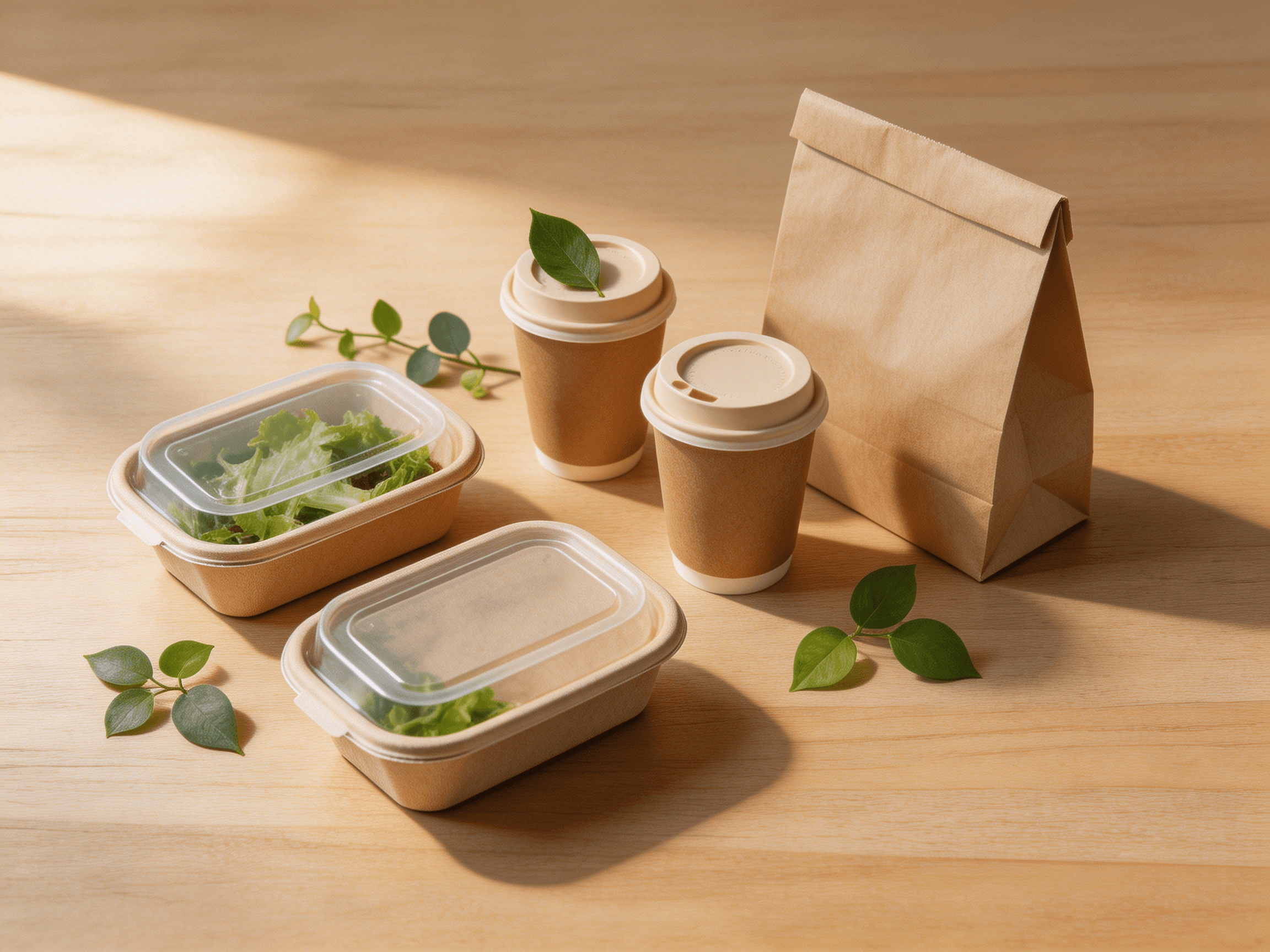
Sustainable Food Packaging Options for Restaurant and Cafe Chains
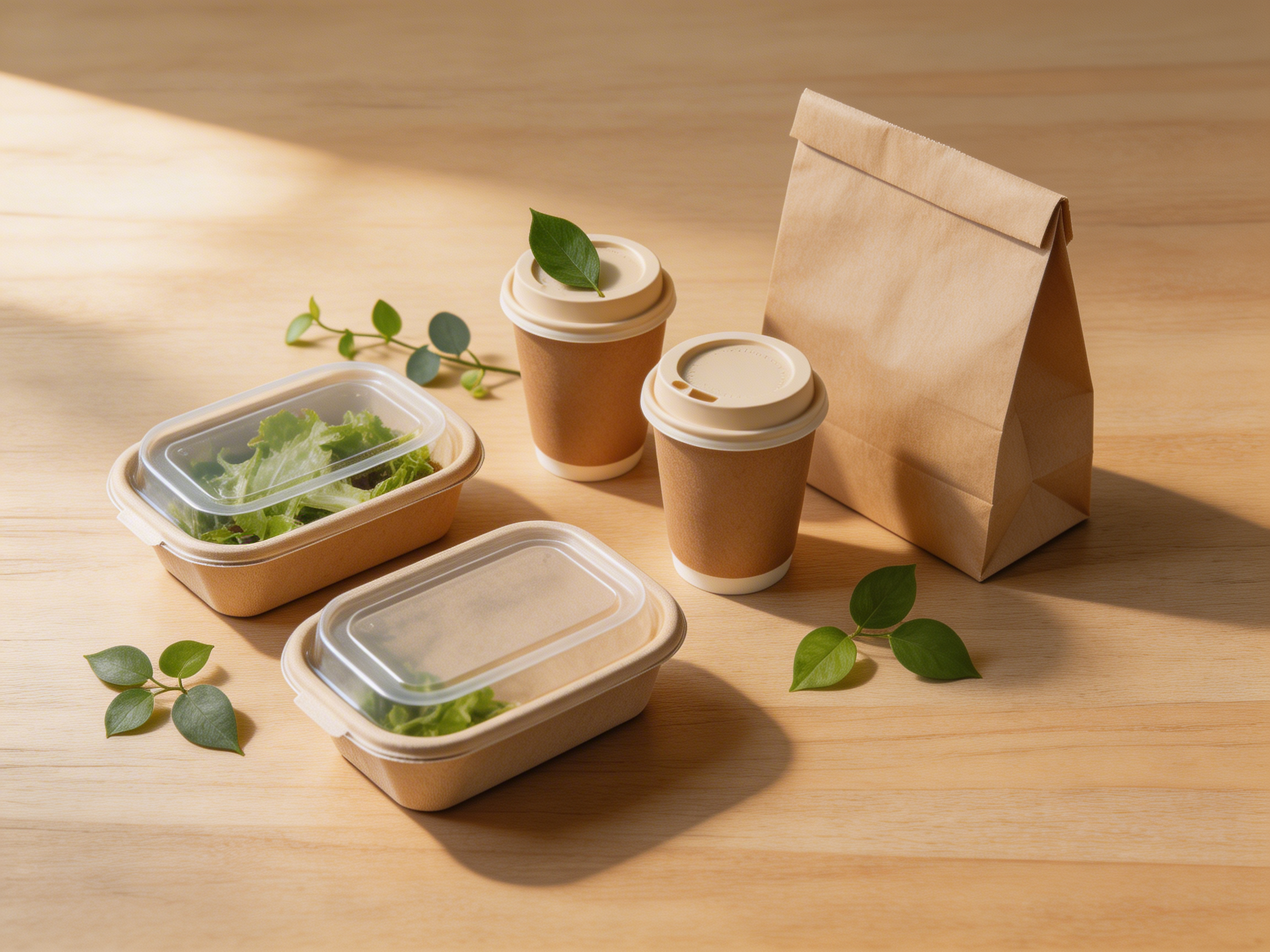
As environmental regulations tighten and consumer preferences shift, restaurant groups, cafe chains, and food delivery brands face mounting pressure to adopt sustainable packaging. For procurement teams and business owners, the challenge lies in balancing ecological goals with operational requirements: food safety, cost efficiency, supply reliability, and brand presentation. This guide examines practical sustainable packaging options available through wholesale supply chains, with considerations for multi-location operators and businesses sourcing at volume.
Understanding Sustainable Packaging Categories
The term "sustainable packaging" covers several distinct approaches, each with different implications for your operations.
Compostable Packaging
Compostable materials, typically plant-based fibers like bagasse (sugarcane pulp), bamboo, or palm leaf, break down in commercial composting facilities within 90-180 days. These suit businesses with access to commercial composting infrastructure or those targeting zero-waste certifications. Operational considerations: Compostable packaging often requires specific storage conditions (dry, moderate temperatures) and may have shorter shelf lives than conventional alternatives. Lead times from overseas manufacturers typically run 30-45 days for customized items.
Recyclable Packaging
Paper-based packaging, aluminum containers, and certain plastics (PET, PP with proper labeling) fit existing recycling streams in most markets. This approach suits operations prioritizing simplicity for end-consumers and broad geographic distribution. Operational considerations: Recyclable packaging offers wider supplier availability and generally shorter lead times. Mixed-material packaging (paper with plastic windows, for example) often contaminates recycling streams—specifying mono-material construction avoids this issue.
Reusable Systems
Deposit-return schemes, durable containers for delivery operations, and bring-your-own incentives represent emerging sustainable approaches. These suit businesses with control over distribution channels (captive delivery fleets, corporate catering contracts) or strong customer relationships enabling behavioral change.
Material Selection by Application
Hot Beverage Cups
Double-wall paper cups with PLA (corn-based) or water-based barrier coatings offer heat retention without traditional polyethylene linings. These suit coffee chains and QSR beverage programs. Specifying FSC-certified paper sources adds supply chain credibility for sustainability reporting. Customization options include sleeve printing, cup lid compatibility (PLA lids for fully compostable systems), and multiple size configurations from 4oz to 20oz.
Food Containers
Bagasse clamshells and bowls provide grease-resistant, microwave-safe alternatives to foam or plastic. These suit fast-casual concepts, catering operations, and meal-prep delivery services. Available in white or natural fiber finishes, with options for compartmentalized designs. Kraft paper bowls with PLA lining offer an alternative for hot, liquid-heavy items (soups, grain bowls, pasta). Matching lids with venting options prevent condensation issues during transport.
Carry-Out Bags
Kraft paper bags with twisted paper handles serve full-service restaurants, bakeries, and retail food operations. Specifying recycled content percentages (30-100% post-consumer waste) supports sustainability claims. Custom printing on bags, typically flexographic, offers brand visibility with lower minimum order quantities than some alternative packaging categories.
Supply Chain Considerations for Multi-Location Operators
Consolidated Sourcing
Restaurant groups operating multiple locations or brands benefit from unified packaging specifications across concepts. This approach increases per-SKU order volumes, improving pricing leverage and reducing administrative complexity. Mixed-container loading—combining cups, containers, and bags in single shipments—optimizes freight costs from overseas manufacturing sources.
Specification Consistency
Standardizing sizing and lid compatibility across packaging categories reduces operational errors (incorrect lid-cup combinations) and simplifies inventory management. For chains with franchise or licensed operations, specification consistency ensures brand presentation uniformity across markets.
Sample and Prototyping Workflows
Before committing to volume production, restaurant groups benefit from physical sample evaluation: fit testing with actual menu items, lid-seal verification for transport scenarios, and print proofing for branded elements. Suppliers offering structured sample programs—with stock sample availability and custom mockup capabilities—reduce specification risk for procurement teams.
Conclusion
Sustainable packaging selection for restaurant and cafe chains requires balancing environmental objectives against operational realities. The most effective approach typically combines multiple strategies: compostable materials where infrastructure supports them, recyclable options for broad compatibility, and continuous refinement based on supplier capabilities and regulatory evolution. For procurement teams evaluating packaging partnerships, practical considerations—consistent quality, reliable lead times, flexible minimum order quantities, and export logistics experience—often determine program success more than material specifications alone.
Looking to source sustainable packaging for your restaurant group? Contact the TakeawayPack team to discuss custom specifications, sample programs, and consolidated sourcing options for multi-location operations.