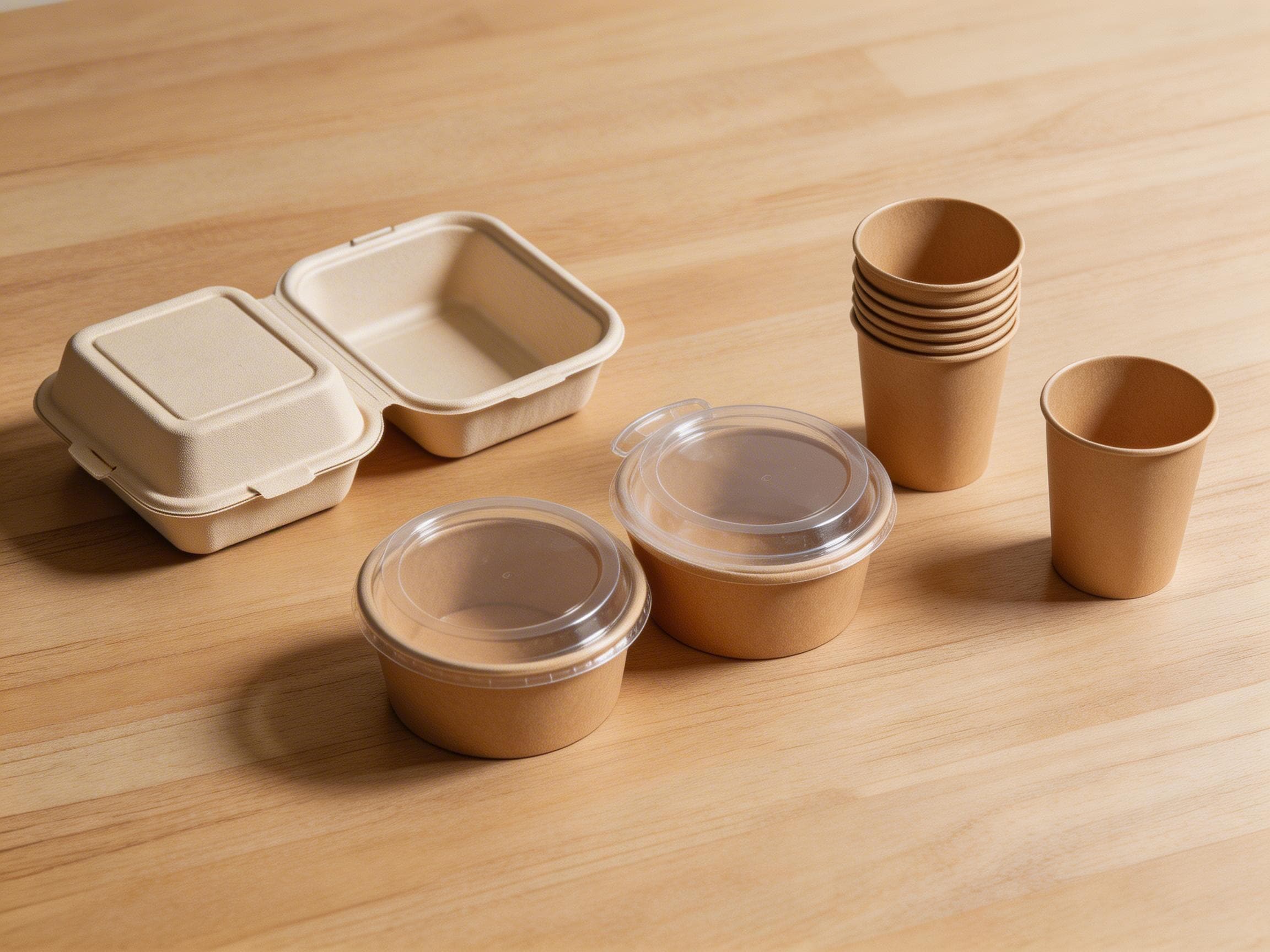
Biodegradable vs Plastic Food Packaging: A Food Safety Guide for B2B Buyers
Biodegradable vs Plastic Food Packaging: A Food-Safety Comparison for Buyers
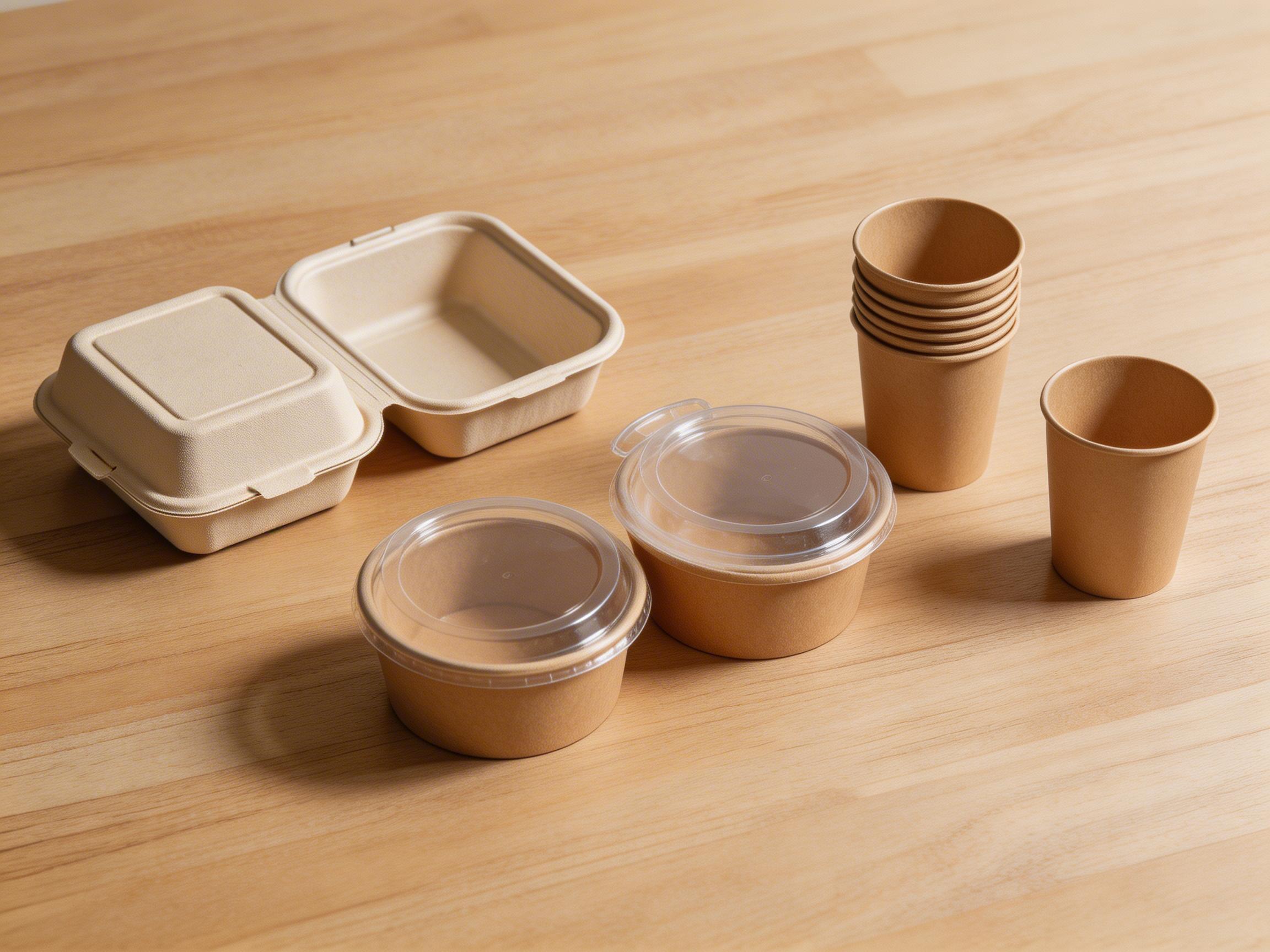
For restaurants, catering companies, and food-service distributors, packaging choice is not only an environmental statement — it is a direct food-safety decision. The container that holds a hot biryani, a chilled salad, or a takeaway latte must protect the product without introducing harmful substances. With regulatory pressure mounting on single-use plastics and consumer demand for sustainable alternatives rising fast, procurement teams face a genuine question: can biodegradable packaging match or exceed the food-safety performance that plastic has delivered for decades? This article examines the two material families through a food-safety lens — barrier performance, chemical migration, temperature resistance, and regulatory compliance — so that food-business buyers can make sourcing decisions grounded in evidence rather than marketing claims.
What "Biodegradable" Actually Means in Food Packaging
The term "biodegradable" describes any material that microorganisms can break down over an undefined period. It does not, by itself, guarantee food safety. What matters is whether the material has been tested and certified for food contact. More useful is the label "compostable" — a stricter designation meaning the material will fully decompose under specific conditions (typically industrial composting at 55–60 °C) within a defined timeframe, leaving no toxic residue. In Europe, EN 13432 is the harmonised standard; in the United States, ASTM D6400 and D6868 serve the same purpose. Common biodegradable food-packaging materials include:
- PLA (polylactic acid): derived from corn starch or sugarcane; clear, rigid, good for cold-food containers and cup lids.
- Bagasse (sugarcane fibre): heat-resistant, sturdy, widely used for clamshell containers and bowls.
- Kraft paper with bio-liners: grease-resistant and suitable for dry or baked goods.
- CPLA (crystallised PLA): a modified PLA with higher heat tolerance, used for hot-drink cup lids. Each of these can be food-safe — but only when sourced from manufacturers who conduct migration testing and hold the relevant certifications.
The Food-Safety Case for Plastic — and Its Limits
Plastic has earned its dominance honestly: it offers excellent moisture and gas barriers, is lightweight, and withstands a wide temperature range. Polypropylene (PP) and polyethylene terephthalate (PET) are the workhorses of takeaway food packaging.
Advantages
- Low migration risk when properly manufactured. Food-grade PP and PET are inert under normal conditions. Regulatory frameworks such as EU Regulation 10/2011 and FDA 21 CFR set strict specific migration limits (SMLs), and compliant products perform well.
- Temperature versatility. PP tolerates microwave reheating up to about 120 °C; PET performs well for chilled and ambient foods.
- Barrier integrity. Plastic containers seal tightly, limiting oxygen ingress and microbial contamination risk.
Drawbacks
- Microplastic shedding. Research has shown that plastic containers can release microplastic particles into food, especially when heated or subjected to mechanical stress. While the long-term health implications are still being studied, this concern is driving regulatory reviews in the EU and elsewhere.
- Additive leaching. Some plastics contain plasticisers, BPA, or colourants that may migrate into food, particularly oily or acidic foods, at elevated temperatures. Sourcing from vetted, certified suppliers mitigates this but does not eliminate the category risk.
- End-of-life contamination. Plastic that is not properly recycled persists in the environment and enters the food chain indirectly.
Biodegradable Packaging: Food-Safety Strengths and Gaps
Where Biodegradable Materials Excel
- No persistent chemical residue. Compostable materials certified to EN 13432 must pass ecotoxicity testing, meaning they do not leave harmful residues in soil — and by extension, are far less likely to leach persistent contaminants into food.
- Natural fibre barriers. Bagasse and kraft paper do not rely on synthetic polymers for their structural integrity. When paired with food-grade bio-liners (e.g., PLA coatings), they provide effective grease and moisture resistance.
- Consumer trust signal. For food businesses, using certified compostable packaging signals a safety-conscious, forward-thinking brand — increasingly important as B2B clients (hotel groups, airline caterers, event organisers) set their own sustainability procurement criteria.
Where Buyers Should Exercise Caution
- Heat resistance varies by material. Standard PLA begins to deform above 45 °C; it is unsuitable for hot-fill or microwave use. CPLA and bagasse perform significantly better, withstanding temperatures up to 100 °C. Always match material to application.
- Moisture barrier limitations. Unlined kraft paper absorbs moisture and can weaken during contact with wet foods. A PLA or PE bio-coating is essential for soups, sauces, and salads.
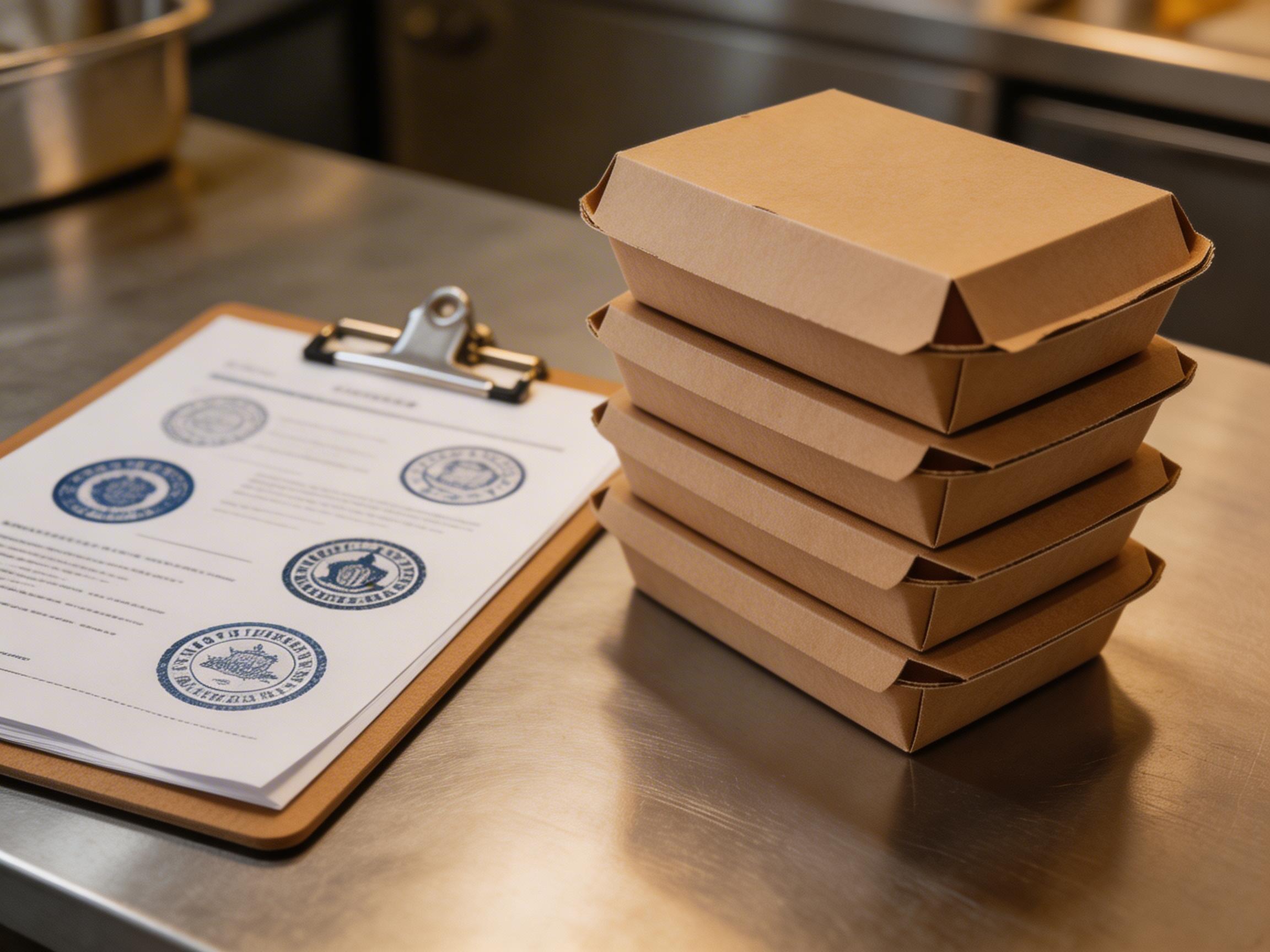
- Supply-chain certification gaps. Not every factory producing biodegradable packaging has food-contact migration test reports. Buyers must request documentation — migration test results, FDA or EU food-contact compliance letters, and third-party audit reports — before placing orders.
Regulatory Compliance: What Buyers Must Verify
Regardless of material, food-contact packaging must meet the regulatory standards of the destination market. The following table summarises key requirements:
| Region | Regulation | What It Covers |
| EU | Regulation (EC) No 1935/2004 & Regulation (EU) No 10/2011 | General safety, specific migration limits, declaration of compliance |
| US | FDA 21 CFR Parts 174–179 | Food-contact substance notification, GRAS status |
| UK | UK SI 2019/703 (post-Brexit equivalent of EU rules) | Material-specific requirements, labelling |
| Middle East | GSO standards (varies by country) | Often references EU or US frameworks |
For both plastic and biodegradable packaging, buyers should insist on:
- A Declaration of Compliance (DoC) from the manufacturer.
- Migration test reports conducted by accredited laboratories.
- Batch-level traceability linking finished goods to raw-material certificates.
Practical Sourcing Guidance for Food Businesses
1. Match Material to Menu
A biryani restaurant needs heat-resistant, grease-proof containers (bagasse or CPLA). A juice bar prioritises clarity and cold-chain performance (PLA cups or PET). A bakery may find that kraft windowed boxes with bio-liners offer the best balance of presentation, protection, and sustainability.
2. Validate Before You Scale
Order samples before committing to volume. Test with your actual menu items — hot, cold, oily, acidic — to check for leakage, deformation, or off-flavours. At TakeawayPack, we provide stock samples and can arrange custom mockups based on your artwork and product requirements.
3. Plan for Mixed Product Shipments
Most operators use a combination of materials: plastic lids on paper cups, PLA-lined kraft soup containers, bagasse takeaway boxes. Working with a supplier that supports mixed-product sourcing simplifies logistics and ensures consistent quality standards across all items.
4. Consider the Total Cost of Compliance
Cheaper, uncertified packaging may save pennies per unit but can create liability — product recalls, customer complaints, failed inspections. Factor in certification costs, quality-inspection checkpoints, and the value of pre-shipment random inspections into your total landed cost.
How TakeawayPack Supports Safe, Sustainable Sourcing
As a B2B food-packaging supplier serving importers, distributors, and food-service operators across Europe, the Middle East, Southeast Asia, and Oceania, TakeawayPack offers:
- Broad SKU coverage across biodegradable and conventional plastic lines, allowing buyers to source the right material for each application.
- Flexible MOQ, enabling smaller operators and pilot programmes to test biodegradable options without committing to container-load volumes.
- Supplier qualification and QC, including pre-production artwork checks, production-follow-up, and random pre-shipment inspections.
- Customisation — logo printing, size adjustments, colour matching — so your packaging protects both the food and your brand.
- Mixed loading support to consolidate multiple product types in a single shipment, reducing logistics cost and lead time. Whether you are transitioning fully to biodegradable packaging or running a hybrid programme, the food-safety fundamentals remain the same: verify certifications, match materials to menu requirements, and work with suppliers who can document every link in the chain.
Conclusion
Neither biodegradable nor plastic packaging is inherently "safer" — safety depends on the specific material grade, the manufacturing process, and the regulatory compliance of each product. Biodegradable materials can match and in some respects exceed plastic's food-safety performance, provided they are correctly specified and sourced from qualified factories. For food-business buyers, the practical path is to evaluate packaging on a per-application basis: use heat-resistant bagasse or CPLA for hot foods, PET or PP where superior barrier performance is critical, and PLA for cold beverages where clarity and compostability are priorities. In every case, insist on migration test data, Declarations of Compliance, and supplier audit documentation. If you are evaluating your packaging supply chain and want to discuss material options, request samples, or review compliance documentation, reach out to the TakeawayPack team at info@takeawaypack.com.