Why Disposable Food Containers Are the Smart Choice for Event Catering
Running a catering operation for events — whether it is a corporate conference, an outdoor festival, a wedding reception, or a community gathering — means managing dozens of.
2026-06-30 - 7 min read
Overview
Running a catering operation for events — whether it is a corporate conference, an outdoor festival, a wedding reception, or a community gathering — means managing dozens of moving parts. Food packaging often gets overlooked until the last minute, yet it has a direct impact on food quality, service speed, guest satisfaction, and your bottom line. Disposable food containers, when sourced thoughtfully, solve many of the logistical headaches that event caterers face every day.
In this article we break down the practical advantages of using disposable food containers for events, the key container types worth stocking, and how sourcing from a specialist packaging supplier can streamline your procurement.
Convenience That Keeps Service on Schedule
Events run on tight timelines. During peak service windows, kitchen teams and front-of-house staff need to plate, pack, and serve hundreds of meals within minutes. Disposable containers speed this up enormously because there is no washing, sorting, or stacking of reusable dishware between courses or after the event.
For outdoor festivals and pop-up catering stations, where access to running water and dishwashing facilities is limited or nonexistent, disposables are not just convenient — they are essential. Pre-stacked containers in uniform sizes also make portion assembly faster, reducing the chance of errors during rush periods.
Lower Risk of Breakage and Replacement Costs
Ceramic plates, glass bowls, and metal trays are prone to chipping, cracking, or being accidentally discarded at busy events. The replacement cost adds up quickly, especially if you are servicing multiple events per week.
Disposable containers eliminate that risk entirely. If a kraft paper bowl or a PP plastic container is dropped or lost, the financial impact is negligible compared with breaking a piece of porcelain. For catering companies that transport equipment between venues, lighter disposable packaging also reduces freight weight and the labour needed for loading and unloading.
Cost Efficiency Across the Event Lifecycle
Disposable packaging delivers savings at several stages:
Purchase cost. Buying disposable containers in bulk is significantly cheaper per unit than investing in commercial-grade reusable tableware.
Cleaning cost. No dishwashing means savings on labour, water, energy, and cleaning chemicals.
Transport cost. Lighter loads mean lower fuel costs and fewer vehicle trips.
Storage cost. Disposable containers are stackable and compact, requiring less warehouse or van space between events.
For catering businesses and event organisers that operate on thin margins, these savings can be redirected towards higher-impact areas such as menu quality, staffing, or venue decoration.
Variety and Aesthetics to Match Any Occasion
Modern disposable packaging has moved far beyond plain white foam boxes. Today's options include:
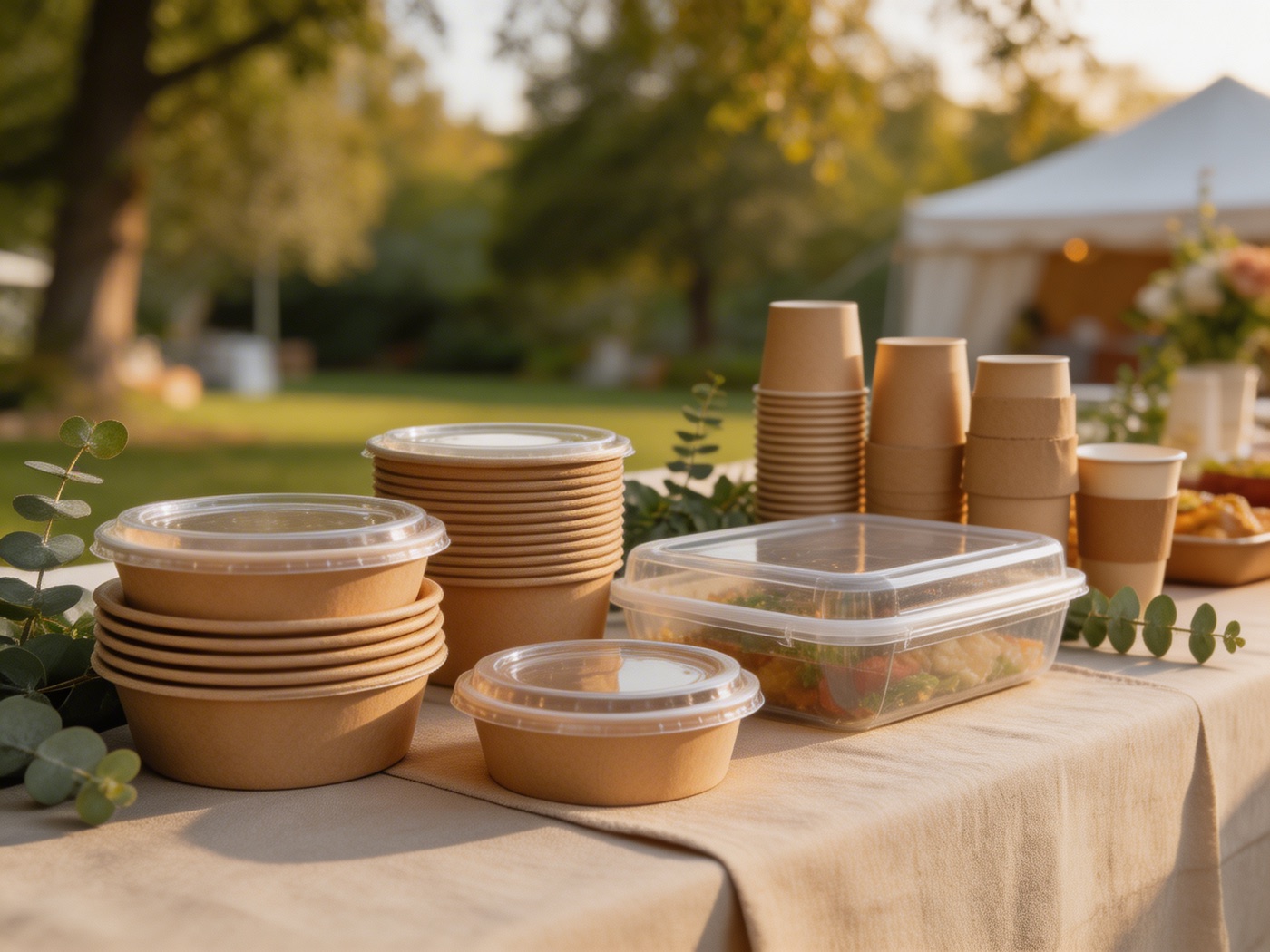
Kraft paper bowls with natural, rustic textures — ideal for street food, grain bowls, and salad stations.
Rigid plastic containers with clear lids that showcase the food inside, perfect for dessert displays or boxed lunch programmes.
Elegant paper plates and platters that mimic ceramic finishes for formal seated events.
Custom-printed takeaway boxes that carry your brand logo and colour scheme.
Having a broad range of container styles available means you can match the packaging to the tone of each event — casual and colourful for a music festival, clean and minimal for a corporate seminar, or warm and artisan for a farm-to-table dinner.
Portion Control and Consistent Presentation
Many disposable container formats come in standardised volumes. This built-in portion sizing helps kitchen teams serve consistent portions without weighing each plate individually, which is especially useful when feeding hundreds of guests.
Consistent portions also mean more accurate ingredient ordering and less food waste. Over time, this consistency translates into predictable costing and tighter budget management across your event calendar.
Hygiene and Food Safety Advantages
Food safety is non-negotiable at any event. Disposable containers are used once and then discarded or recycled, which removes the risk of cross-contamination that can occur when reusable dishware is improperly washed between services.
For events where guests serve themselves — buffets, food stalls, tasting counters — individually packaged portions in sealed disposable containers give attendees confidence that their food has been handled safely.
Sustainability Options for Eco-Conscious Events
Sustainability is increasingly important to event organisers and attendees alike. Fortunately, disposable does not have to mean environmentally harmful. Many container materials now available are designed with end-of-life considerations:
Bagasse containers are compostable and suitable for hot and cold foods.
Kraft paper bowls and boxes use renewable materials and are widely recyclable.
PLA-lined paper cups and containers offer a plant-based alternative to traditional plastic linings.
Wooden cutlery provides a biodegradable complement to disposable tableware.
When sourcing from a knowledgeable packaging supplier, you can select materials that align with the sustainability commitments of your event or brand.