How to Source Plastic Takeaway Containers That Fit Your Menu and Your Margins
Selecting the right plastic takeaway containers is one of those operational decisions that quietly affects food quality, customer satisfaction, and unit economics across every.
2026-06-30 - 6 min read
Overview
Selecting the right plastic takeaway containers is one of those operational decisions that quietly affects food quality, customer satisfaction, and unit economics across every order. Whether you run a single-location takeaway shop or manage procurement for a multi-site restaurant group, understanding how material, size, lid type, and supplier capabilities interact will help you make better buying decisions.
This guide breaks down the key considerations from a sourcing perspective, so you can confidently spec containers that work for your food and your business.
Why Container Choice Matters More Than You Think
A container is not just a vessel. It influences how food looks on arrival, whether sauces leak in transit, if customers can reheat leftovers directly, and how your brand appears in the growing delivery-photo culture on social media.
Getting the container wrong means:
Leakage and spills during delivery, leading to complaints and refunds
Soggy or crushed food from poor structural integrity
Missed branding opportunities when containers look generic
Wasted spend on containers that are oversized or inappropriate for the menu item
Getting it right means food arrives looking as good as it tasted in the kitchen — and customers remember that.
Understanding Plastic Materials for Takeaway Containers
The material you choose determines heat tolerance, clarity, rigidity, and recyclability. Here are the main types used in food-service packaging:
Polypropylene
PP is the workhorse of the takeaway container world. It has a high melting point, making it suitable for hot food and microwave reheating. PP containers resist oils and acids, so they hold up well with curries, pasta sauces, and dressings.
Best for: Hot meals, microwave-safe meal prep, portion-controlled dishes.
Polyethylene Terephthalate
PET is valued for its crystal-clear appearance, which makes food look appealing — especially cold items. It is lightweight, shatter-resistant, and widely recyclable. PET is not suitable for hot food, but it excels for chilled and ambient-temperature applications.
Best for: Salads, cold sandwiches, fruit portions, dessert parfaits, deli displays.
High-Density Polyethylene
HDPE offers excellent resistance to moisture and grease. It is slightly opaque and more rigid than PP in thin-gauge applications. Because of its grease barrier, it is often used for containers that hold oily or saucy foods where you do not need a clear window.
Best for: Fried items, gravies, and foods with high oil content.
Polystyrene and Expanded Polystyrene
Once common in the industry, PS and EPS are increasingly restricted by local regulations in Europe, the Middle East, and parts of North America. Many markets now ban or heavily tax single-use EPS food packaging. If you are sourcing for export, verify the regulatory landscape of your destination market before committing to PS-based products.
Matching Container Size and Shape to Your Menu
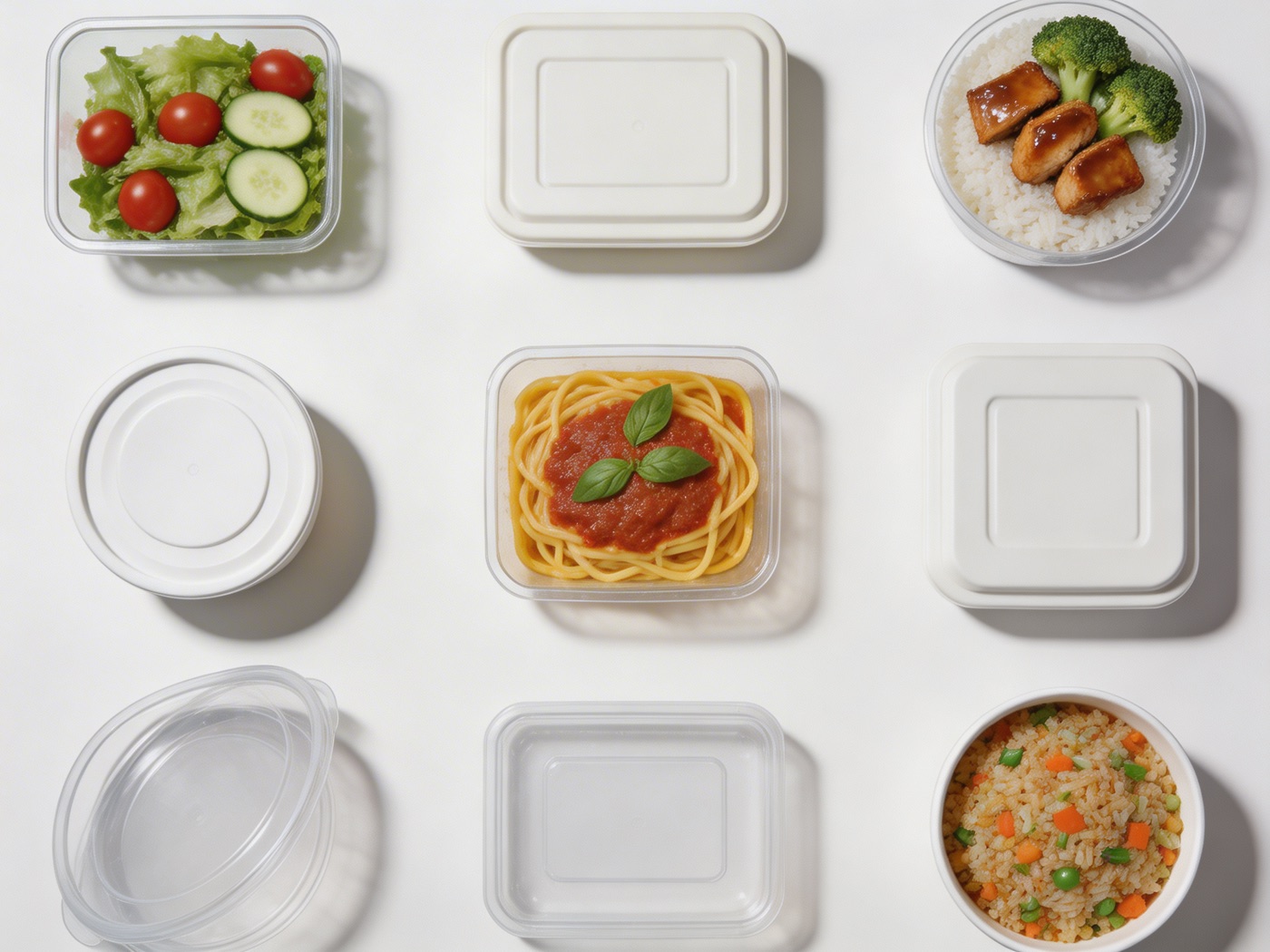
Containers come in a range of shapes — rectangular, round, oval, and square — and capacities from roughly 250 ml to 1500 ml and beyond. Here is how to align form factor with function:
| Shape | Typical Use | Advantage | |-|-|-| | Rectangular | Rice boxes, noodle dishes, mixed grills | Space-efficient for stacking and delivery bags | | Round | Soups, curries, pasta | Even heat distribution, easy to seal | | Oval | Roast dinners, large single portions | Premium presentation | | Square | Salad bowls, dessert cups | Clean aesthetic, good shelf display |